
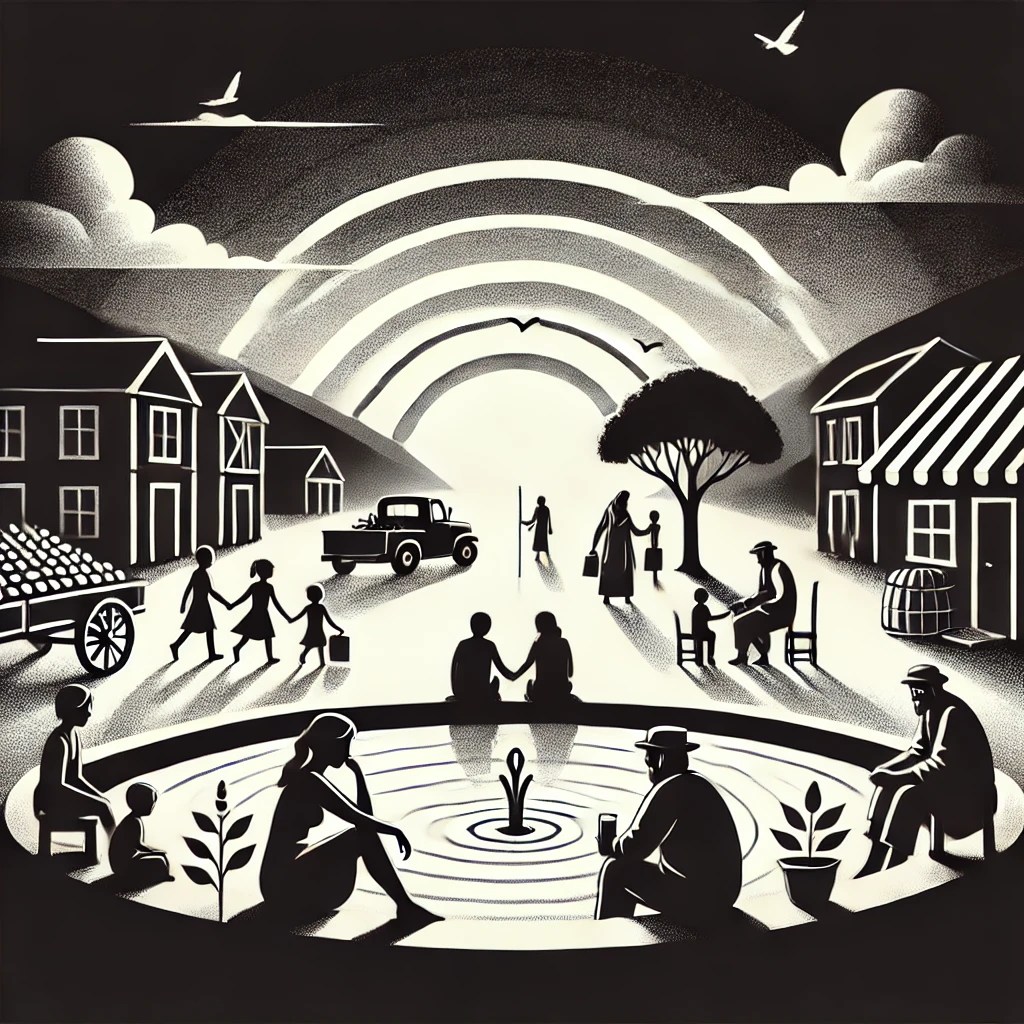
The village square is bathed in the golden glow of late afternoon. Children chase each other around a worn fountain, their laughter echoing against the weathered stone of the surrounding buildings. A farmer passes by, her basket filled with freshly picked fruit, while a merchant barters with a young couple over bolts of colorful fabric. In this moment, life unfolds in its ordinary beauty, uncomplicated by celestial proclamations or divine interventions.
Throughout human history, we’ve woven supernatural explanations into the fabric of our understanding. These weren’t mere stories. They were attempts to make sense of a world that often seemed chaotic and cruel. When children died of mysterious illnesses, when storms destroyed entire communities, when injustice went unchecked, supernatural beliefs offered both explanation and comfort. They provided a framework for understanding suffering, a promise of ultimate justice, and hope for reunion with loved ones lost.
Picture yourself standing in a medieval cathedral, where sunlight streams through stained glass windows depicting angels and saints. The very architecture reaches toward heaven, its spires and arches designed to make the divine feel closer to earth. In such spaces, it was easy to believe in miracles, in divine intervention, in the literal presence of God among us. The idea that Jesus was God’s son, born of a virgin, performing miracles and rising from the dead: these beliefs helped bridge the seemingly infinite gap between human and divine.
But we live in a different world now. We’ve walked on the moon and peered into the heart of atoms. We’ve traced the evolution of life across billions of years and mapped the human genome. We understand how diseases spread and why natural disasters occur. The smartphones in our pockets can instantly access more knowledge than all the ancient libraries combined. In this context, supernatural beliefs often become barriers rather than bridges to deeper understanding.
Consider Sarah, a young scientist who grew up in a devout family. She loves the moral teachings of Jesus: his emphasis on compassion, his standing with the marginalized, his challenges to systemic injustice. But she struggles to reconcile these profound ethical insights with claims about walking on water or raising the dead. The cognitive dissonance eventually forces a choice: either reject her rational understanding of the world or walk away from the wisdom she values.
This pattern repeats countless times in our modern world. People who hunger for moral guidance and community find themselves unable to accept the supernatural framework these teachings come wrapped in. They can’t believe in a literal heaven floating above or a hell burning below. They can’t accept that divine intervention shapes world events while children still die of preventable causes. They can’t embrace the idea that sacred objects hold magical powers or that specific rituals channel divine grace.
Traditional religions ask us to accept a world where divine beings intervene in human affairs, where prayers can alter the laws of nature, where ancient prophecies foretell the future, and where supernatural forces battle for human souls. They present a cosmos populated by angels and demons, where divine punishment awaits sinners and heavenly rewards await the faithful. These beliefs, which once provided comfort and explanation, now often create more questions than they answer.
The traditional response has been to demand that people simply believe: to have faith despite their doubts. But this approach no longer works for many modern minds. We’ve learned too much about how the universe actually functions. We’ve developed too great an appreciation for natural cause and effect. We’ve come to understand that morality itself emerges from human nature and the requirements of community living, not from divine commandments.
Visit a modern hospital, where dedicated professionals work to heal the sick. They don’t rely on miraculous cures or divine intervention. Instead, they use evidence-based medicine, technological innovations, and deep human compassion. Their work is no less meaningful (indeed, it may be more profound) because it operates through natural rather than supernatural means.
This shift away from supernatural belief doesn’t mean rejecting everything traditional religions offer. Just as we can appreciate Shakespeare without believing in ghosts, or learn from Greek philosophy without accepting the Olympic gods, we can embrace the profound moral and practical wisdom in religious traditions without requiring supernatural faith.
Consider how this shift transforms our understanding of life’s key moments. Birth becomes no less miraculous for being understood through biology. Death becomes no less meaningful when viewed as a natural transition rather than a supernatural gateway. Love becomes no less powerful when seen as an evolved capacity for connection rather than divine intervention.
This evolution in understanding invites us to reconsider not just supernatural events but also how we approach the sacred practices of traditional religion. Consider prayer: for millennia, humans have knelt in supplication, asking divine powers to intervene in their lives. They’ve pleaded for healing, for fortune, for protection from harm. These prayers arose from our deepest needs and highest aspirations, expressing both our vulnerability and our hope.
But what if we’ve misunderstood prayer all along? What if its power lies not in attracting divine attention but in focusing our own? When we sit in quiet reflection, whether alone or in community, something profound happens in our minds and bodies. Our breathing slows, our thoughts settle, and we begin to see our lives with greater clarity.
Picture Marina, who once prayed for God to solve her problems. Now, following The Path, she practices what we might call mindful reflection. Each morning, she sits quietly in her garden. She acknowledges her concerns and hopes, not as requests to a supernatural being but as a way to clarify her own thoughts and intentions. She contemplates what she’s grateful for, not to earn divine favor but because gratitude itself transforms how we experience life.
Science has begun to understand what contemplative traditions have long known: regular periods of quiet reflection change our brains and bodies in measurable ways. They reduce stress, improve emotional regulation, enhance empathy, and strengthen our ability to maintain perspective in difficult times. These benefits don’t require supernatural belief. They emerge from natural processes in our minds and bodies.
In our Assemblies, we practice collective reflection. Picture a group seated in comfortable silence, eyes closed, breathing slowly. Someone might speak words that guide our thoughts: “Consider those who are suffering in our community. Visualize their faces. Feel their struggles. Now consider what specific actions you might take to ease their burden.” This isn’t prayer in the traditional sense. We’re not asking a divine being to help. Instead, we’re training our minds to see more clearly and act more wisely.
The power of these practices lies in their ability to shift our perspective and clarify our values. When we regularly take time to reflect on our lives and our impact on others, we naturally become more intentional in our choices, more aware of our connections, and more responsive to others’ needs. We don’t need supernatural intervention to experience this transformation. It grows from our innate capacity for awareness and compassion.
This approach to reflection can help us navigate life’s challenges in profound ways. Consider grief: traditionally, prayer offered comfort through promises of heavenly reunion. In The Path, we sit with loss differently. We acknowledge its pain fully, without seeking supernatural comfort. We reflect on the impact our loved ones had on us, not as souls watching from above but as lives that touched ours in lasting ways. This honest confrontation with mortality often leads to deeper appreciation of life and stronger commitment to living meaningfully.
The same principles apply to how we face moral challenges. Rather than asking “What would Jesus do?” as a request for divine guidance, we reflect deeply on the ethical principles his life exemplified. We consider how compassion, justice, and integrity might shape our choices. This isn’t about earning divine approval. It’s about developing our own moral compass through thoughtful reflection and conscious choice.
Consider the night sky. Our ancestors saw divine messages in the patterns of stars. We now know these points of light are suns like our own, many harboring planets, stretching across incomprehensible distances. Has this scientific understanding made the sight less wonderful? Less moving? Less capable of inspiring deep questions about our place in the cosmos? Many would argue it has made it more so.
The same holds true for the moral teachings we’ve inherited. Stripped of supernatural elements, their wisdom shines more brightly. Love your neighbor becomes not a divine command but a recognition of our shared humanity. Forgiveness becomes not a requirement for heavenly reward but a path to breaking cycles of harm. Justice becomes not a future divine intervention but a present human responsibility.
The Path offers a way forward. We acknowledge that concepts like heaven and hell once served to encourage moral behavior, but we recognize that humans are capable of ethical action based on reason, empathy, and understanding of consequences. We appreciate how ideas of divine origin and authority helped establish moral teachings, but we now ground these principles in human experience and natural law.
In our Assemblies, we don’t pray for miraculous intervention. We discuss practical ways to help our neighbors. We don’t perform rituals to channel divine power. We build real connections that strengthen our communities. We don’t threaten eternal damnation or promise heavenly rewards. We explore how our choices create ripples of impact in the here and now.
As night settles over our village square, imagine people gathering in homes and community spaces. Some sit in quiet reflection, others engage in thoughtful discussion, all seeking to live with greater awareness and purpose. There’s no supernatural force guiding their choices, no divine being keeping score. Instead, there’s something perhaps more miraculous: human beings choosing to pause, reflect, and act with intention to create a better world.
This is how The Path transforms traditional religious practices into tools for genuine growth and connection. We maintain the disciplines that enhance human flourishing while setting aside supernatural explanations that no longer serve us. In doing so, we don’t diminish the sacred. We locate it where it has always truly resided: in the everyday choices, relationships, and moments of awareness that make life meaningful.
Whether sitting in silent reflection, gathering for mutual support, or working to help others, we’re engaging with life’s deepest mysteries and possibilities. We don’t need miracles or supernatural interventions to make these experiences profound. The natural world, human consciousness, and our capacity for love and wisdom provide wonder enough.
This is the heart of The Path: a way of living that honors truth, compassion, and connection without requiring belief in the supernatural. It invites us to find meaning not in divine intervention but in human action, not in future rewards but in present choices, not in miraculous transformations but in the daily work of building a better world together. The power to transform ourselves and our world lies not in heaven above but in our own hearts, minds, and hands, guided by reason, compassion, and the shared wisdom of human experience.
Let’s walk The Path together...
 The Path
Leave a comment