
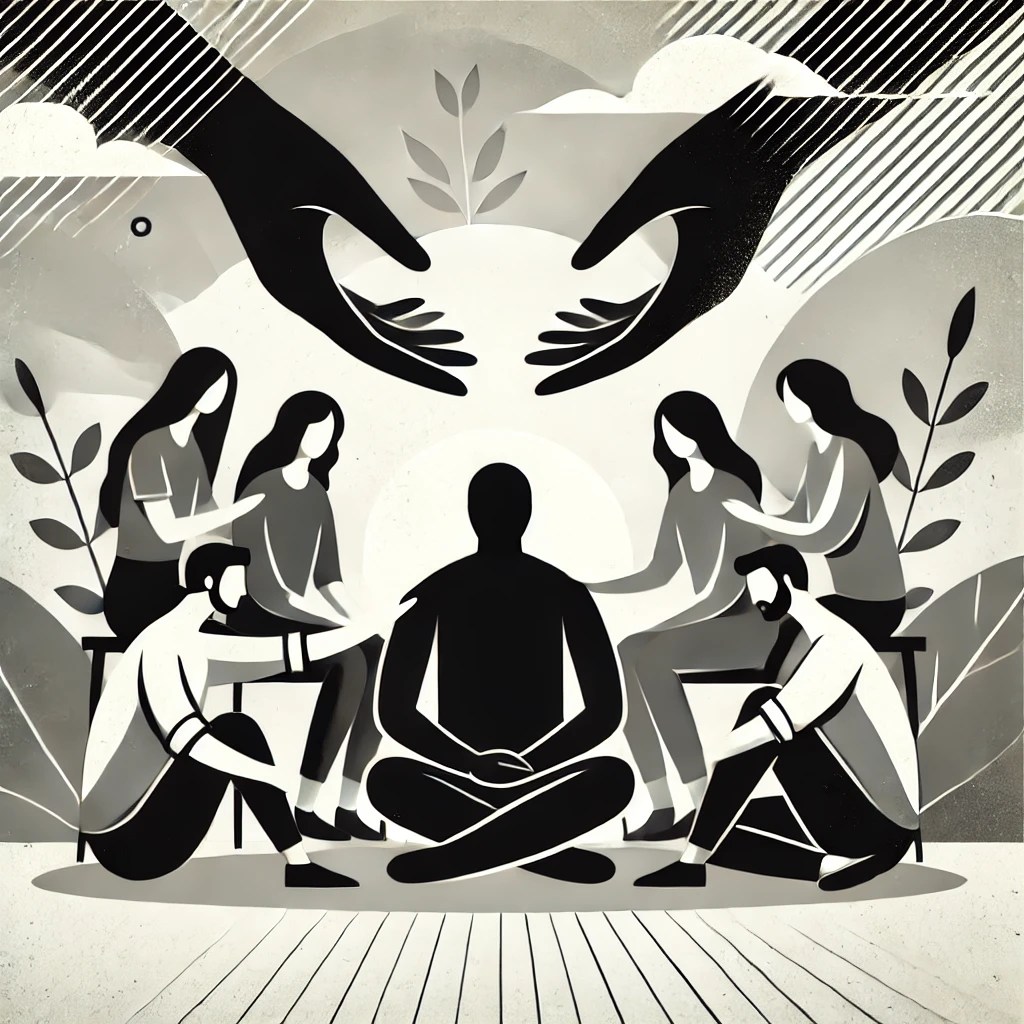
Let me take you to three moments I’ve witnessed. In a hospital waiting room, a mother learns her child has terminal cancer. In a downtown office, a man discovers his life’s work has been destroyed by forces beyond his control. In a quiet bedroom, an elderly woman faces her final days alone. These moments (raw with pain, heavy with questions) are where The Path’s truth matters most.
Traditional religions often tell us suffering serves a divine purpose. That God never gives us more than we can handle. That everything happens for a reason. These answers, though well-meaning, often deepen pain rather than ease it. They turn victims into guilty parties, wondering what they did to deserve their fate. They transform the universe into a cosmic test, with suffering as the examination paper.
The Path offers something different: the truth. Suffering isn’t a divine plan or cosmic punishment. It’s woven into the fabric of existence itself, as natural as gravity, as inevitable as entropy. Just as rivers carve valleys, forces of nature shape our lives, sometimes gently, sometimes with devastating power.
When that mother in the hospital asks “Why my child?”, The Path doesn’t offer comfortable lies about divine plans. Instead, we acknowledge that cells sometimes mutate, that biology operates on principles of probability rather than justice, that being human means being vulnerable to life’s random chances. This truth might seem harsh, but watch what happens next.
Without supernatural explanations to lean on, we’re freed to focus on what actually helps. The Assembly gathers around the family, not with prayers alone, but with meals prepared, siblings cared for, medical research explained in understandable terms, and a community of support that shows up day after day. They don’t say “It’s in God’s hands.” They say “We’re here with you, and we’ll help you through this.”
Consider the man who lost his life’s work. Religious friends told him to trust in divine providence. The Path showed him how every ending contains seeds of beginning. We know this not from scripture but from observing nature itself. Forest fires, devastating as they are, create conditions for new growth. The death of stars seeds space with elements that will form new worlds. Understanding this doesn’t eliminate pain, but it illuminates a way forward.
“What happens when we die?” Perhaps no question weighs more heavily on human hearts. Religions offer visions of heavenly rewards or fearsome punishments. The Path invites us to embrace a deeper truth: we are part of something larger than ourselves.
Watch what happens when a leaf falls from a tree. It doesn’t vanish. It transforms, becoming part of the soil that nurtures new life. Our bodies, too, return to the elements from which they came. The atoms that form us (forged in ancient stars) will continue their cosmic journey. But there’s more.
Every life creates ripples that continue long after physical existence ends. That elderly woman facing her final days? Her Assembly helped her see how her influence lives on, in the children she taught over decades of teaching, in the community garden she started, in the wisdom she shared that shaped countless lives. This isn’t metaphorical immortality. It’s the literal truth about how human influence propagates through time.
“Why are we here?” Religion answers with divine purposes and cosmic plans. The Path suggests we’re asking the wrong question. Instead of seeking meaning assigned from above, we discover meaning through connection, creation, and contribution.
I watched a grief support group in an Assembly tackle this question. One member, struggling after losing her partner, found no comfort in being told “He’s in a better place.” Instead, she found meaning in understanding how their love had changed her at the cellular level, how their relationship had literally rewired her brain, making her who she was. She found purpose not in waiting for a heavenly reunion but in living in a way that honored their shared values.
Traditional faiths promise cosmic justice: reward for the good, punishment for the wicked, if not in this life then the next. The Path acknowledges a harder truth: justice isn’t a natural force like gravity. It’s a human creation, one we must actively build and maintain.
When a community faced systematic discrimination, religious leaders offered prayers for divine intervention. The Assembly organized legal aid, documented violations, educated people about their rights, and built coalitions for change. They understood that justice isn’t delivered by supernatural means but built through human effort, knowledge, and determination.
There’s a remarkable power in facing reality without supernatural cushions. I witnessed a cancer patient find more peace in understanding the biological processes of her disease than in being told it was somehow part of a divine plan. She used her knowledge not just to inform her treatment decisions but to help others understand their own conditions. Her suffering became a source of wisdom rather than a divine mystery.
When words fail (and they often do in life’s hardest moments), The Path offers something more valuable: presence. Not prayer circles but circles of support. Not divine intervention but human connection. Not miraculous cures but the miracle of people showing up day after day, proving through actions that no one faces the darkness alone.
Resilience isn’t about having unshakeable faith. It’s about understanding how humans naturally adapt and grow through challenge. Neuroscience shows us how adversity can strengthen neural pathways. Psychology reveals how processing difficult experiences with others builds emotional strength. Biology demonstrates how stress, within manageable levels, can enhance our capabilities.
This knowledge doesn’t eliminate suffering, but it transforms how we face it. When we understand that pain isn’t punishment but information, that grief isn’t weakness but love persisting beyond loss, that challenges aren’t tests but opportunities for growth, we find strength not in divine protection but in human capacity.
Every Assembly becomes a living laboratory of human resilience. People share not just their pain but their insights. They learn from each other’s experiences. They discover that while suffering can’t always be avoided, it can be faced together. They find that questions without answers can still lead to wisdom, that doubt can deepen understanding, that uncertainty can open doors to growth.
The Path doesn’t promise freedom from suffering. Instead, it offers something more valuable: the tools to face it, the knowledge to understand it, the community to share it, and the wisdom to grow through it. We don’t need supernatural explanations to find meaning in life’s hardest moments. We need understanding, connection, and the courage to face reality together.
As we close this chapter, remember: The universe may not have a divine plan, but it has patterns we can understand. Life may not have a predetermined purpose, but it has meaning we can create. Suffering may not have a cosmic reason, but it has responses we can choose. And while we can’t control everything that happens to us, we can control how we face it: together, with wisdom, understanding, and unshakeable support.
This is The Path’s answer to life’s hardest questions: not comfortable lies, but difficult truths. Not supernatural hopes, but natural resilience. Not divine intervention, but human connection. And in this truth, this resilience, this connection, we find something more powerful than any supernatural comfort: the real, demonstrated, awe-inspiring capacity of humans to face whatever comes, learn from it, grow through it, and help others do the same.
Let’s walk The Path together...
 The Path
Leave a comment