
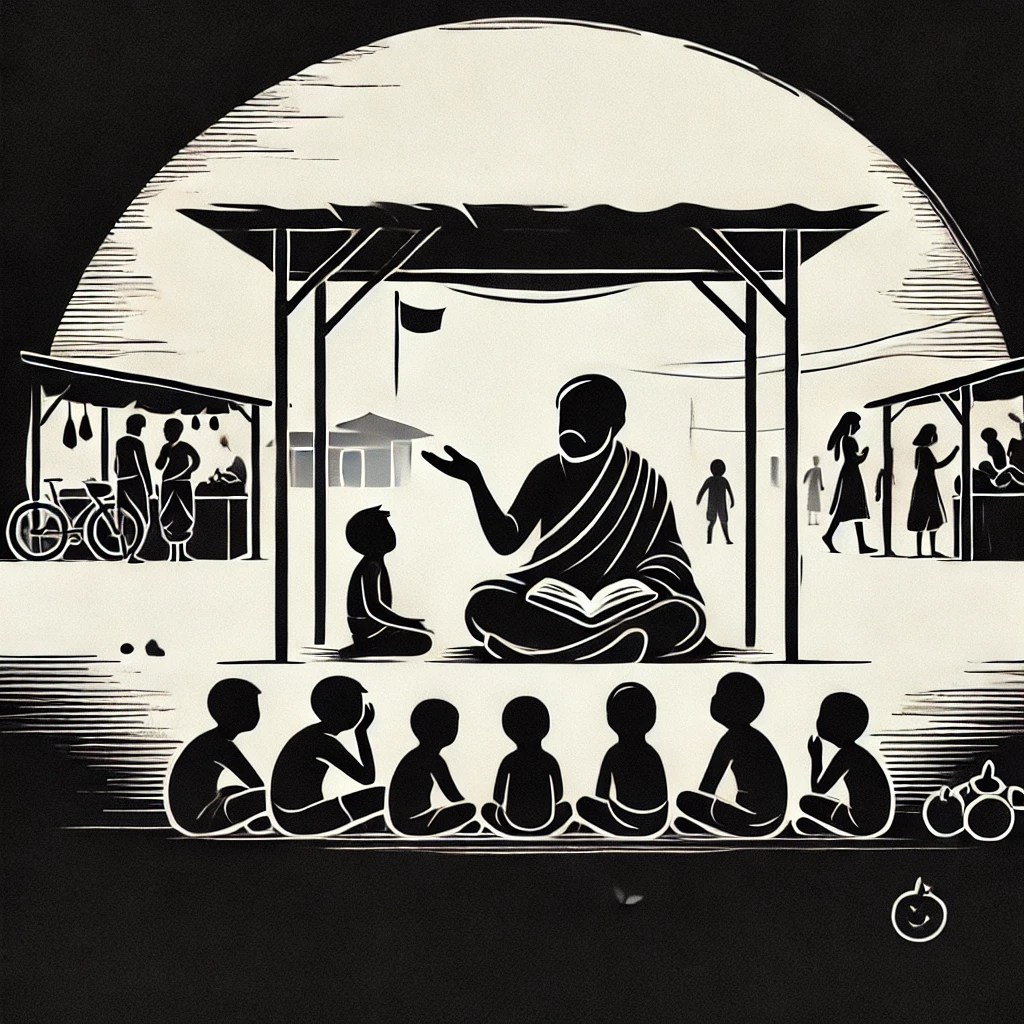
The village is alive with the hum of voices and the clatter of daily life. Beneath the shade of a weathered awning, a small group gathers around a man seated on the dusty ground. His voice is steady but quiet, carrying a wisdom that needs no amplification. The air is thick with the scent of baking bread and sun-warmed earth. Children pause in their play to listen, and even the marketplace vendors lean in to catch his words. This is how we imagine Jesus: not as a figure shrouded in miracles, but as a teacher whose profound understanding of human nature would echo through millennia.
Two thousand years ago, life in the Galilean countryside was not easy. Farmers wrestled with the whims of nature, laborers toiled under oppressive systems, and families struggled to make sense of the injustices they faced. Roman taxation crushed the poor, religious authorities often served power rather than truth, and social divisions ran deep. It was in this crucible of human struggle that Jesus emerged, not as a divine emissary but as a voice of radical compassion and practical wisdom.
Consider the scene: A young man approaches Jesus, wealthy and respected, seeking the path to a meaningful life. Jesus looks at him with compassion and offers a challenge that still resonates today: “Sell what you own, give the money to the poor.” This wasn’t about supernatural salvation; it was a profound lesson about the emptiness of materialism and the fulfillment found in helping others. In our modern world of extreme inequality and rampant consumerism, these words cut just as deep.
Picture a hillside overlooking the Sea of Galilee. The morning sun casts long shadows as people gather: farmers and fishermen, merchants and craftspeople, the wealthy and the destitute. Jesus begins to speak, and what follows is perhaps the most profound collection of ethical teachings ever articulated.
“Blessed are the poor in spirit,” he begins, challenging the assumption that wealth and power indicate divine favor. This wasn’t just about material poverty. It was a call to spiritual humility, to recognizing our shared vulnerability and interdependence. In today’s world of carefully curated social media images and relentless self-promotion, this message of humility feels more necessary than ever.
“Blessed are those who mourn,” he continues, acknowledging the reality of grief and suffering while promising that compassion and community can heal our deepest wounds. Think of how this applies today: to families torn apart by addiction, to communities ravaged by violence, to individuals struggling with mental health. The path to healing still lies in acknowledging our pain and supporting one another through it.
“Blessed are the meek,” he declares, not praising weakness but highlighting the strength found in gentleness and restraint. In our age of outrage and escalation, imagine how different our public discourse would be if we embraced this principle. The meek aren’t passive. They’re those who choose patience over aggression, understanding over confrontation.
“Blessed are those who hunger and thirst for justice,” he proclaims, and we can almost hear the crowd’s murmur of recognition. This wasn’t abstract philosophy. It was a call to action that still echoes in every movement for social change, every stand against corruption, every effort to protect the vulnerable.
“Do unto others as you would have them do unto you.” These words, simple yet revolutionary, form the cornerstone of Jesus’s ethical teaching. But he went beyond this basic principle, challenging his followers to extend compassion even to those who wrong them. “Love your enemies,” he taught, “pray for those who persecute you.”
Imagine applying this in today’s world: A community torn apart by political differences comes together to rebuild after a natural disaster. Former rivals work side by side, finding common ground in shared purpose. This is the Golden Rule in action: not naive idealism, but a practical path to breaking cycles of hatred and revenge.
Jesus was a master storyteller, using simple tales to convey profound truths. Let’s explore some of his most powerful parables and their relevance today.
A man lies beaten on the road. Religious leaders pass by, perhaps too busy with important duties. Then comes a Samaritan (member of a despised group) who stops to help. This story shatters tribal boundaries and challenges us to see humanity in everyone. Think of modern parallels: A mosque opening its doors to shelter homeless people of all faiths. A conservative church and LGBTQ+ community center collaborating on a food bank. These are today’s Good Samaritans, crossing social boundaries to serve human need.
A young man demands his inheritance early, squanders it, and returns home in shame. His father runs to embrace him, celebrating his return while his dutiful older brother seethes with resentment. This isn’t just about divine forgiveness. It’s a profound exploration of family dynamics, redemption, and the complexity of human emotions. How many families today are torn apart by addiction, political differences, or perceived betrayals? This parable offers a path to healing through unconditional love and forgiveness.
A master entrusts different amounts of money to three servants. Two invest and multiply their resources, while one buries his portion in fear. This isn’t about money management. It’s about using our gifts and opportunities responsibly. In today’s world, think of someone using their education to serve underrepresented communities, or an entrepreneur creating jobs in a struggling neighborhood. These are modern examples of multiplying our “talents” for the greater good.
A poor widow gives two small coins (all she has) while the wealthy make a show of their larger donations. Jesus points out that her gift means more because it comes from her poverty. This story cuts to the heart of authentic generosity versus performative charity. Today, we might think of the minimum wage worker who volunteers at a soup kitchen, or the retired teacher who spends her time tutoring struggling students. True giving isn’t measured in dollars but in sacrifice and sincerity.
Jesus consistently challenged the systems and structures that oppressed people in his time. He confronted religious leaders who placed burdens on the poor while living in luxury. He questioned traditions that valued rules over human needs. He stood with those society rejected (tax collectors, prostitutes, lepers) not to condone harmful behaviors but to affirm human dignity.
Picture him in the temple courtyard, overturning the tables of money changers who exploited poor pilgrims. This wasn’t blind rage. It was righteous anger at systemic injustice. Today, we might see parallels in movements against predatory lending, advocacy for fair housing, or protests against environmental destruction of poor communities. Speaking truth to power isn’t just a right; it’s a moral obligation.
“It is easier for a camel to go through the eye of a needle than for someone who is rich to enter the kingdom of God.” These words have often been softened or explained away, but their challenge remains sharp: wealth can become a spiritual prison, blinding us to the needs of others and our own deeper purpose.
Jesus wasn’t advocating universal poverty, but he consistently warned against the spiritual dangers of materialism. “Where your treasure is, there your heart will be also.” Think of today’s consumer culture, where worth is measured in possessions and success in bank balances. His teachings call us to a different measure of value: one based on generosity, compassion, and contribution to community.
Consider the story he told of the rich man who built bigger barns to store his surplus, only to die before he could enjoy it. How many today sacrifice relationships, health, and purpose in the pursuit of wealth? The lesson isn’t that planning for the future is wrong, but that hoarding wealth while others suffer is morally bankrupt.
Perhaps no aspect of Jesus’s teaching was more radical than his emphasis on forgiveness. When asked how many times one should forgive, he answered “seventy times seven,” effectively saying there should be no limit. This wasn’t about being a doormat; it was about breaking cycles of revenge and resentment that poison both individuals and communities.
Imagine a modern scenario: A family torn apart by addiction slowly rebuilds through forgiveness and understanding. A community divided by racial injustice begins healing through acknowledgment, repentance, and reconciliation. These processes aren’t easy. They require courage, honesty, and commitment. But they offer the only path forward from cycles of harm.
“Let your yes be yes, and your no be no.” In a world of spin and manipulation, Jesus advocated radical honesty. He criticized those who made elaborate oaths while breaking their basic word. Think of today’s world, where “alternative facts” compete with truth, and public trust erodes through deception. His call for integrity becomes more relevant, not less.
He taught that true purity isn’t about external compliance but internal transformation. “It’s not what goes into your mouth that defiles you,” he said, “but what comes out.” This shifts focus from rule-following to character development. In modern terms, we might think of the difference between legal compliance and ethical behavior, between avoiding punishment and pursuing genuine goodness.
“Judge not, lest you be judged.” These famous words aren’t a call to abandon discernment, but an invitation to practice empathy and understanding. Jesus consistently challenged his followers to examine their own faults before criticizing others. Picture the scene as he confronts a crowd ready to stone a woman caught in adultery: “Let the one without sin cast the first stone.” One by one, they walk away, confronted by their own imperfection.
This teaching revolutionizes how we handle conflict and difference. Instead of rushing to condemnation, we’re called to seek understanding. Instead of demanding perfection from others, we’re invited to acknowledge our shared humanity. In today’s polarized world, imagine the transformation possible if we approached disagreement with this spirit of humility and grace.
Jesus’s teaching wasn’t all abstract principle. He offered practical wisdom for daily living. “Don’t worry about tomorrow,” he advised, not dismissing planning but warning against anxiety that paralyzes action. “Be wise as serpents and innocent as doves,” he counseled, advocating both strategic thinking and moral integrity.
He taught by example as much as words. When faced with opposition, he responded with calm clarity rather than defensive anger. When confronted with human need, he acted with compassion rather than judgment. When questioned by authorities, he answered with wisdom that exposed their true motives while offering genuine truth.
As we walk The Path today, these teachings of the original teacher light our way. Not as dogma to be blindly followed, but as wisdom to be thoughtfully applied. Not as supernatural commands, but as profound insights into human nature and community.
In our Assemblies, we explore these teachings through modern eyes. A discussion of the Good Samaritan might lead to examining our own prejudices and opportunities to serve. Reflecting on teachings about wealth might inspire community initiatives for economic justice. Studying lessons about forgiveness might help heal personal and social wounds.
The historical Jesus, stripped of supernatural elements, emerges as something more relevant than a divine figure: a profoundly wise teacher whose insights can transform our world. His vision of human community based on compassion, justice, and mutual care speaks directly to our modern challenges.
As the sun sets on our imagined village scene, the teacher’s words continue to resonate through time: “By this everyone will know that you are my disciples, if you have love for one another.” Not love as mere feeling, but love as active choice, as practical service, as commitment to justice and community. This is the heart of his teaching, and the foundation of The Path we walk today.
Each step we take in applying these teachings (whether in personal relationships, community service, or systemic change) honors this legacy. Not through worship or ritual, but through living the truth he taught: that human flourishing comes through compassion, justice, and care for one another. This is The Path he illuminated, and the one we continue to walk together.
Let’s walk The Path together...
 The Path
Leave a comment