
Imagine, if you will, a different Jesus than the one taught in most Sunday sermons. Picture not the supernatural savior, but a profound teacher of wisdom whose insights about human nature and community still resonate today. This is the Jesus who emerges from the ancient pages of the Gospel of Thomas, a text discovered in 1945 that reveals how diverse early understandings of Jesus’s message truly were.
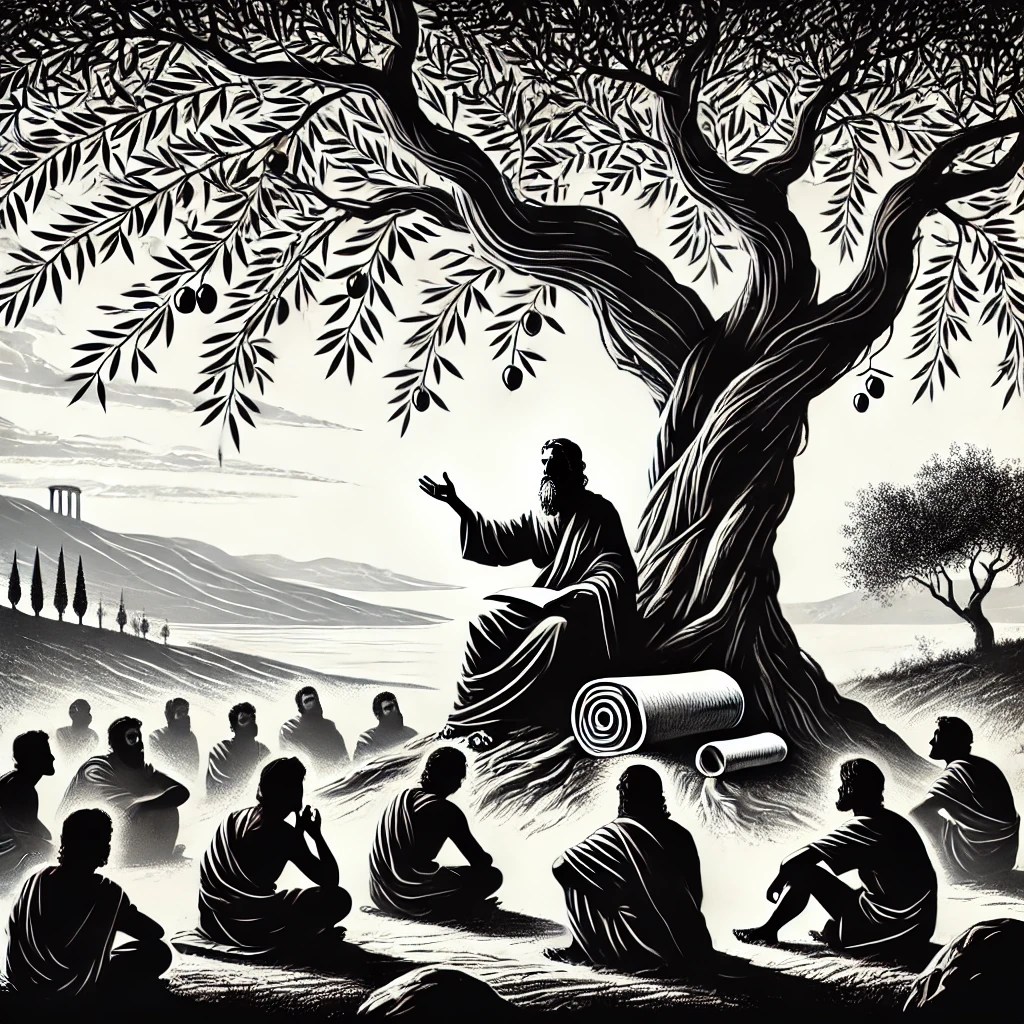
Picture a teacher sitting in the shade of an olive tree, sharing insights that would challenge how we think about wisdom and truth. The Gospel of Thomas shows us not a divine figure demanding worship, but a teacher offering practical wisdom about human transformation. This aligns perfectly with what we seek on The Path—truth that stands on its own merit, without requiring miraculous claims.
When Thomas records Jesus saying “If you bring forth what is within you, what you bring forth will save you,” we hear something revolutionary: that transformation comes not through supernatural intervention, but through understanding and acting on the wisdom we discover. This isn’t about divine sacrifice or heavenly rewards—it’s about the very human process of growth through insight.
Consider how Thomas presents Jesus’s teachings about the “kingdom.” Instead of describing a supernatural realm above, he points to the reality that surrounds and permeates us: “Split a piece of wood; I am there. Lift up the stone, and you will find me there.” This mirrors The Path’s understanding that profound truth doesn’t require supernatural explanations—it’s woven into the fabric of existence itself.
The wisdom-teacher Jesus we meet in Thomas offers something The Path deeply values: practical insights about human flourishing that don’t depend on miraculous claims. His teachings show us that the deepest truths about living well and building strong communities don’t require supernatural beliefs.
This text reveals that even in earliest Christianity, some understood Jesus not as a divine sacrifice but as a teacher of profound wisdom about human nature and community. The Path carries forward this tradition, not through supernatural faith, but through practical application of timeless insights about compassion, justice, and human connection.
 The Path
Leave a comment