
Let me tell you about Maria, who I watched struggle with a decision that many of us face. A coworker had taken credit for her work, threatening her chance at a promotion she desperately needed to support her family. The principles of The Path called for forgiveness and understanding. But reality – her children’s needs, her mounting bills, her fear of being exploited again – pulled her in another direction.
Maria’s story illuminates something crucial about walking The Path: the distance between knowing what’s right and doing what’s right often feels like an ocean. Today, let’s explore why that ocean exists and how to bridge it.
Understanding Our Struggles
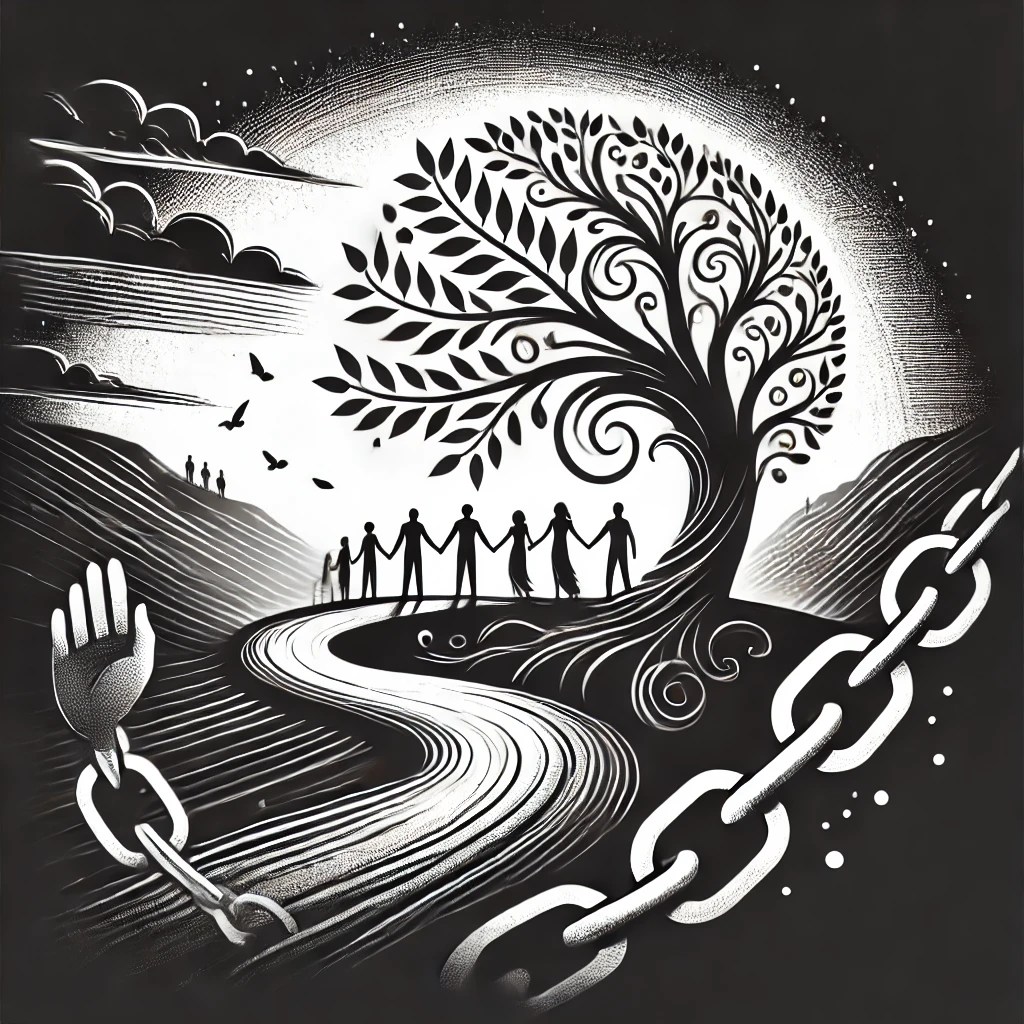
Watch a tree growing on a mountainside. When winds constantly blow from one direction, the tree grows at an angle, adapting to survive. Our moral behavior works similarly. Economic pressures, cultural expectations, past trauma – these are the constant winds that shape our responses, often without our awareness.
I’ve observed people in an Assembly discussing their struggles with practicing The Path’s principles. A small business owner admits how economic pressure makes him hesitate to be generous. A woman raised in a hostile environment describes her difficulty trusting others enough to show mercy. A young man from a competitive corporate culture confesses how challenging it is to practice humility when everything around him demands aggressive self-promotion.
These aren’t failures of character – they’re natural responses to real pressures. Understanding this is our first step toward change.
Recognizing Our Patterns
The Path teaches us to become careful observers of our own minds. When you find yourself acting against your principles, pause. Notice what’s happening in your body. Is there tension in your shoulders? A knot in your stomach? These physical sensations often signal that we’re reacting from fear or conditioning rather than choosing from wisdom.
I watched a teacher in an Assembly demonstrate this with a simple exercise. When faced with a moral choice, she takes three conscious breaths. In that pause, she asks herself: “What’s really driving my response right now? Is it my principles, or is it my fears? Am I reacting from past hurt or present wisdom?”
The Role of Community
Here’s something remarkable about human behavior: we find it easier to spot patterns in others than in ourselves. This is why The Assembly proves so valuable. When we share our struggles openly, others can help us see our blind spots with compassion rather than judgment.
Consider James, whose childhood poverty left him with a scarcity mindset that made practicing generosity feel threatening. His Assembly didn’t judge him. Instead, they helped him understand his pattern and supported him in taking small steps toward change. They celebrated when he shared his expertise with others, showing him how generosity doesn’t always require money.
Practical Steps for Change
When you notice yourself struggling with The Path’s principles, try this approach I’ve seen work in Assemblies worldwide:
First, name the principle you’re struggling with. Be specific. Instead of “I’m not being good,” say “I’m having trouble showing compassion to my difficult neighbor.”
Next, identify the winds that are bending your tree. Is it economic pressure? Cultural conditioning? Past trauma? Understanding these forces doesn’t excuse harmful behavior, but it helps us respond more effectively.
Then, look for small steps forward. If poverty makes generosity feel threatening, start with giving time rather than money. If past betrayals make forgiveness seem impossible, begin with understanding rather than full reconciliation.
The Power of Pattern Recognition
I watched a group in an Assembly develop what they called “moral pattern recognition.” They learned to spot their triggers – the situations that typically led them away from their principles. One man realized he was most likely to act against his values when feeling rushed. A woman noticed she struggled most with compassion right after checking social media.
This awareness became their power. The man started building time buffers into his schedule. The woman learned to pause after social media to reset her perspective. Small changes, but they led to significant shifts in behavior.
Breaking Old Patterns
Remember Maria? She found her way forward by first acknowledging her fear – not just of losing the promotion, but of being seen as weak if she showed forgiveness. Her Assembly helped her see how standing firm in her principles could demonstrate more strength than retaliation.
She chose to document her work carefully going forward while having an honest conversation with her coworker about collaboration and credit. This approach honored both her principles and her practical needs. More importantly, it broke her pattern of choosing between survival and ethics.
The Courage to Begin Again
Here’s something crucial about walking The Path: we will all stumble. Economic pressures will sometimes overwhelm our generosity. Cultural conditioning will sometimes override our compassion. Past trauma will sometimes hijack our responses.
The Path’s power lies not in perfect performance but in persistent return. Every time we notice we’ve strayed, every time we choose to begin again, we strengthen our moral muscles. Each return is not a failure but a victory of awareness over automation, of choice over conditioning.
Moving Forward Together
As we close, remember this: the very forces that make walking The Path challenging – economic pressure, cultural conditioning, past trauma – are precisely why we need its principles so desperately. Our world needs more compassion because life is hard. We need more forgiveness because we’re all shaped by forces beyond our control. We need more generosity because so many are struggling.
In your own journey, be patient with yourself. Notice your patterns. Celebrate small victories. Share your struggles. Remember that every time you choose to return to your principles, you make it a little easier for others to do the same.
This is how we walk The Path – not in perfect steps, but in persistent returns. Not alone, but together. Not despite our challenges, but through them.
Let’s walk The Path together...
 The Path
Leave a comment