
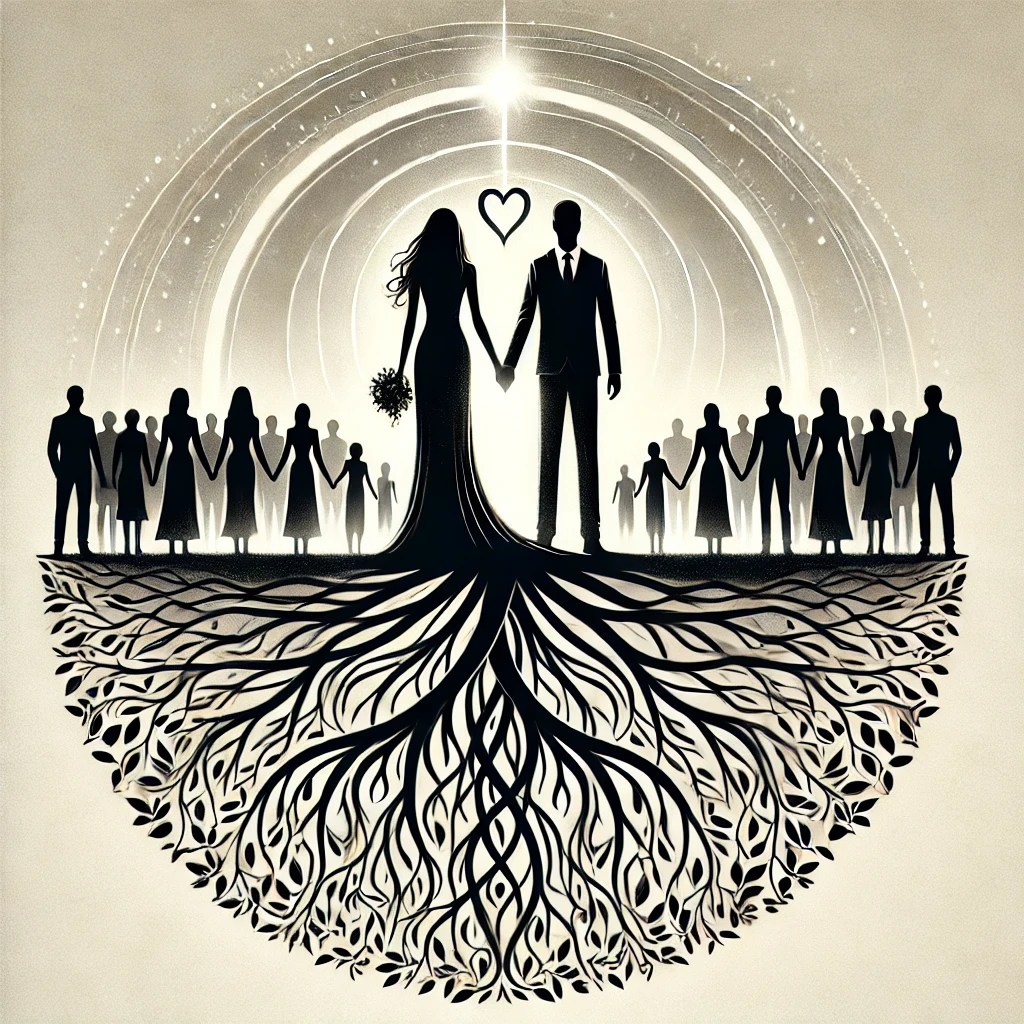
Let me tell you about two ceremonies I witnessed. The first took place in a grand cathedral, where a priest declared that God had joined two people together. The second occurred in a community garden, where two people, surrounded by loved ones, made promises to each other that they had written themselves. Both were beautiful. Both celebrated love. But they reflected very different understandings of what marriage means.
The Path views marriage not as a divine institution but as a profound human commitment – one that has evolved alongside human society itself. Archaeological evidence shows that pair-bonding emerged naturally in human communities, providing stability for raising children and building lasting social connections. Marriage ceremonies appeared in every culture not because gods demanded them, but because humans recognized the value of publicly acknowledging and celebrating these life-changing commitments.
The Nature of the Bond
Consider what happens when two people choose to build a life together. Their neural pathways begin to synchronize. Their immune systems adjust to each other. Their habits and personalities influence each other in measurable ways. This isn’t supernatural – it’s the natural result of deep human connection, verified by neuroscience and psychology research.
When The Path celebrates marriages, we honor these biological and psychological realities. We recognize that humans form their strongest bonds through shared experiences, mutual support, and conscious choice. The ceremony isn’t about divine blessing but about community witness and support for this profound commitment.
Evolution of Understanding
Traditional marriages often involved property rights, political alliances, and rigid gender roles. The Path recognizes that human understanding evolves. Today, we know that healthy marriages can take many forms. Research shows that the key factors in successful partnerships are mutual respect, emotional support, and shared values – not adherence to traditional roles or religious rules.
This understanding shapes how The Assembly approaches marriage. Rather than prescribing rigid rules, we help couples explore their values, communicate effectively, and build strong foundations for their relationships. Premarital discussions focus not on religious doctrine but on practical wisdom about communication, conflict resolution, and mutual growth.
The Role of Community
When two people marry, they’re not just joining their own lives – they’re creating new connections between families and communities. The Path recognizes this through celebration and ongoing support. Assemblies become extended families, offering practical help, emotional support, and wisdom drawn from experience rather than doctrine.
Watch what happens in an Assembly when a couple faces challenges. There’s no appeal to divine intervention. Instead, there’s practical support – childcare when needed, counsel from those who’ve faced similar challenges, resources for professional help when appropriate. The community provides what humans have always needed: genuine connection and practical assistance.
Celebrating Commitment
Marriage ceremonies in The Path reflect each couple’s unique journey while incorporating timeless human wisdom. Some choose traditional elements that hold personal meaning. Others create entirely new rituals. What matters isn’t the form but the substance – the genuine commitment being made and the community’s pledge to support it.
I watched a couple incorporate their scientific backgrounds into their ceremony. They spoke of chemical bonds and astronomical phenomena as metaphors for their connection. Another pair used their favorite literary passages and music. Each ceremony reflected not just the couple’s love but their authentic understanding of life’s meaning.
When Marriages End
The Path acknowledges a reality that many religions struggle with: sometimes marriages end. Rather than viewing divorce as moral failure, we see it as a human experience that deserves compassion and support. The same community that celebrates beginnings helps members navigate endings with dignity and wisdom.
This approach reduces the shame and isolation that often accompany divorce. Instead of judgment, people find understanding. Instead of rigid rules, they find practical support for building new lives. The focus stays on human wellbeing rather than institutional doctrine.
Teaching Future Generations
Young people in The Path learn about marriage through observation and honest discussion rather than dogma. They see diverse examples of healthy relationships. They learn about the science of human bonding, the psychology of successful partnerships, and the practical skills needed for lasting connections.
This education includes understanding that marriage isn’t necessary for a fulfilling life. The Path celebrates human connection in all its forms, recognizing that some find their greatest joy and purpose outside traditional partnership.
The Way Forward
As human understanding of relationships continues to evolve, The Path’s approach to marriage evolves too. We maintain what research shows matters most – stable bonds, mutual support, community connection – while remaining open to new insights about how humans can best support each other in building meaningful lives together.
Whether couples choose elaborate celebrations or simple ceremonies, whether they follow traditional forms or create new ones, The Path honors their commitment not as a divine mandate but as a profound human choice. We celebrate not just the romance of the moment but the daily choice to build a life together, supported by a community that understands both the beauty and the challenge of this deeply human endeavor.
We will see you on The Path.
 The Path
Leave a comment